

Owning land in the United States feels impossible for many people today. Home prices keep rising, rent eats up most incomes, and traditional mortgages shut out anyone without perfect credit or a large down payment. Yet, what most buyers don’t realize is that cheap land for sale in the US still exists, often at prices lower than a used car.
Across several states, thousands of acres are being sold quietly for a few hundred to a few thousand dollars. Some of these properties come with owner financing, no credit checks, and flexible payment plans. Others are government or tax-sale lands that never appear on popular real estate apps. The problem isn’t availability, it’s knowing where to look and how to buy safely.
This guide shows you exactly where to find cheap land for sale in the US, which states offer the lowest prices, how much land really costs, and the hidden mistakes that trap first-time buyers. Whether you want land for investment, off-grid living, a mobile home, or future development, this article will help you avoid scams and make smart, affordable land-buying decisions.
What Is Considered Cheap Land in the US?
In the United States, land is generally considered cheap when it is priced far below the national average for buildable or recreational property. While land prices vary widely by state, location, and zoning, most real estate experts agree that cheap land typically falls between $500 and $10,000 per acre, depending on the area.
Cheap land is most commonly found in rural or undeveloped regions, where population density is low and demand is limited. These areas often offer wide-open spaces, fewer restrictions, and long-term investment potential, but they may also lack immediate access to utilities, paved roads, or city services.
Why Is Some Land So Cheap?
Several factors can significantly reduce the price of land in the US:
- Remote location – Far from major cities, jobs, and amenities
- Limited utilities – No water, electricity, or sewer connections
- Zoning restrictions – Agricultural, recreational, or non-residential use
- Access issues – No direct road access or easements
- Tax delinquency – Properties sold through county tax sales
- Low demand areas – Counties with declining or slow population growth
Cheap land is not necessarily bad land. In many cases, it is simply land that does not fit traditional suburban housing demand.
Cheap Land vs. Affordable Land: What’s the Difference?
It’s important to distinguish between cheap land and affordable land:
- Cheap land is priced low upfront but may require additional costs for development.
- Affordable land may cost more initially but already has utilities, road access, and zoning approvals.
For buyers planning off-grid living, RV use, farming, or long-term investment, cheap land can be an excellent opportunity. However, for those wanting immediate construction, cheap land may require extra planning and budget.
Is Cheap Land in the US Legitimate?
Yes, cheap land for sale in the US is real and legal. Many counties, private sellers, and land investment companies offer legitimate properties at low prices. The key is due diligence: verifying ownership, zoning laws, access rights, and property taxes before buying.
When purchased wisely, cheap land can offer:
- Low entry cost into real estate
- Long-term appreciation potential
- Flexible use options
- Minimal holding costs
-
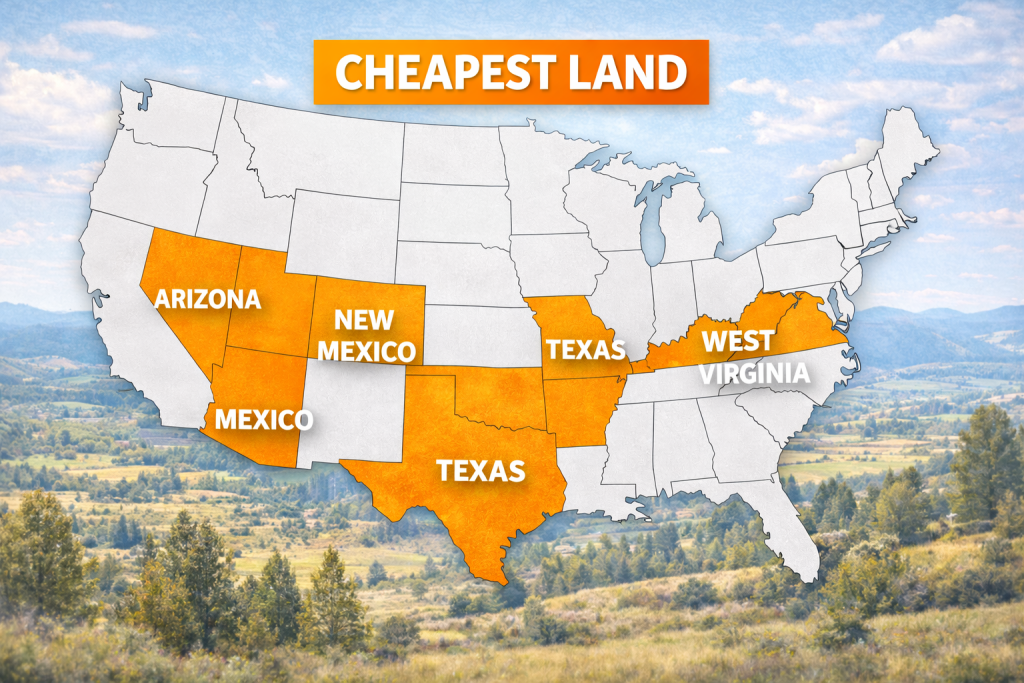
Top 10 States With the Cheapest Land in the US
-
Cheap land in the United States is not evenly distributed. While land prices are extremely high in states like California, New York, and Florida, several states consistently offer some of the lowest land prices in the country, especially in rural counties and undeveloped areas.
These states stand out because of low population density, abundant land supply, flexible zoning, and lower demand, making them ideal for budget buyers, investors, off-grid living, and long-term land holding.
1. Arizona
Arizona is one of the most popular states for cheap land buyers. Large desert regions, minimal rainfall, and vast undeveloped counties keep prices low.
-
- Average price: $1,000 – $4,000 per acre
-
Best for: Off-grid living, long-term investment, RV use
-
Watch out for: Water access and extreme summer heat
2. New Mexico
New Mexico consistently ranks among the cheapest states to buy land in the US. Many parcels are sold with owner financing and no credit checks.
-
Average price: $500 – $3,000 per acre
-
Best for: Budget buyers, desert homesteading, land banking
-
Watch out for: Remote locations and limited infrastructure
3. Texas
Texas offers cheap land primarily in West Texas and rural counties far from major cities.
-
Average price: $2,000 – $6,000 per acre
-
Best for: Ranching, mobile homes, investment
-
Watch out for: Zoning rules vary by county
4. Nevada
Nevada has massive stretches of undeveloped land, especially outside Las Vegas and Reno.
-
Average price: $1,000 – $3,500 per acre
-
Best for: Off-grid living, recreational land
-
Watch out for: Federal land restrictions nearby
5. Arkansas
Arkansas offers some of the cheapest green land in the US, with forests, lakes, and mild weather.
-
Average price: $1,500 – $5,000 per acre
-
Best for: Homesteading, farming, retirement land
-
Watch out for: Flood zones in some counties
6. West Virginia
This state is often overlooked but has extremely affordable rural land.
-
Average price: $1,000 – $4,000 per acre
-
Best for: Privacy seekers, cabins, long-term holding
-
Watch out for: Steep terrain and access roads
7. Colorado
While cities are expensive, southern Colorado still offers cheap land options.
-
Average price: $2,000 – $5,000 per acre
-
Best for: Recreational land, mountain views
-
Watch out for: Short growing seasons
8. Alabama
Alabama combines affordability with favorable climate and low property taxes.
-
Average price: $1,500 – $4,500 per acre
-
Best for: Farming, residential land, investors
-
Watch out for: Wetland restrictions
9. Michigan
Northern Michigan has abundant land at low prices, especially near forests and lakes.
-
Average price: $1,000 – $4,000 per acre
-
Best for: Recreational use, hunting land
-
Watch out for: Harsh winters
10. Tennessee
Tennessee offers cheap land with no state income tax, making it attractive to retirees and investors.
-
Average price: $2,000 – $6,000 per acre
-
Best for: Residential builds, long-term living
-
Watch out for: Zoning differences by county
Why These States Have the Cheapest Land
These states share common characteristics:
-
Large rural land supply
-
Low population growth in certain counties
-
Fewer development pressures
-
Flexible land-use policies
That combination creates opportunities for buyers who know where to look.
-
Cheap Land for Sale in the US by Budget
One of the easiest ways buyers search for land is by price, not location. Many people simply want to know: “How much land can I afford right now?”
The good news is that cheap land for sale in the US exists at almost every budget level—from just a few hundred dollars to under $10,000.
Land Under $1,000 in the US
Yes, land under $1,000 is real—but it usually comes with limitations.
What to expect:
-
Very small parcels or remote lots
-
Often desert or rural land
-
Usually no utilities or road access
-
Commonly sold through tax sales or bulk land sellers
Best for:
-
Long-term investment
-
Recreational use
-
Land banking
Very Important: At this price point, always verify legal access and zoning before buying.
Land Under $5,000 in the US
This is one of the most popular price ranges for cheap land buyers.
What you can get:
-
Larger acreage than $1,000 land
-
Owner-financed deals available
-
Suitable for off-grid living or RV use
-
Lower annual property taxes
Best for:
-
Off-grid homes
-
Mobile homes (where zoning allows)
-
Investors testing land ownership
This price range offers the best balance between affordability and usability.
Land Under $10,000 in the US
Land under $10,000 opens up significantly more options.
What you can expect:
-
Easier road access
-
More flexible zoning
-
Potential for residential building
-
Proximity to small towns
Best for:
-
First-time land buyers
-
Homesteaders
-
Buyers planning future construction
Many buyers choose this range because it reduces risk while still remaining affordable.
Which Budget Is Best for You?
-
$1,000 or less: Long-term hold or speculative investment
-
Under $5,000: Off-grid living, RV land, mobile homes
-
Under $10,000: Building potential and residential use
Choosing the right budget depends on your goal, not just the price.
Where to Find Cheap Land for Sale in the US
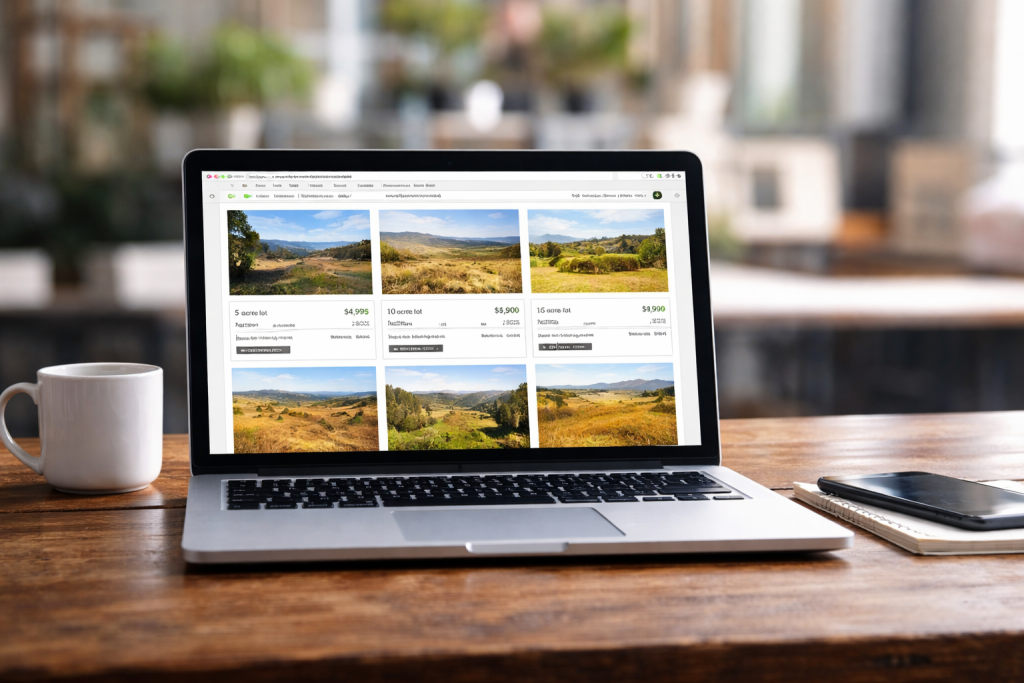
Knowing where to look is often more important than how much money you have. Many of the best cheap land deals in the US never appear on popular real estate apps. Instead, they are sold quietly through government programs, private sellers, and owner-financed platforms.
Below are the most reliable and proven places to find cheap land for sale in the US.
1. County Tax Sales and Auctions
County governments regularly sell land when owners fail to pay property taxes. These properties are often priced far below market value.
Why this works:
-
Extremely low prices
-
Legitimate government sales
-
Opportunities for land under $1,000
Where to look:
-
County treasurer or tax assessor websites
-
Local courthouse auction notices
PLEASE, always confirm liens, zoning, and access before bidding.
2. Government Land Sales
Federal and state agencies sometimes sell surplus or unused land to the public.
One of the most popular sources is the Bureau of Land Management, which offers parcels primarily in western states.
Best for:
-
Desert land
-
Recreational land
-
Long-term investment
3. Owner-Financed Land Websites
Many private land sellers offer no credit check and low monthly payments, making land ownership accessible to almost anyone.
Why buyers love this option:
-
No bank approval
-
Flexible payment plans
-
Fast closing
This is one of the easiest ways for beginners to buy cheap land in the US.
4. Facebook Marketplace and Local Groups
Facebook Marketplace has become a surprisingly strong place to find cheap land deals, especially from local owners.
Tips for success:
-
Search by county name
-
Join local land-buying groups
-
Ask direct questions about zoning and access
NOTE: Avoid sellers who refuse to provide parcel numbers or proof of ownership.
5. Craigslist Land Listings
Although outdated in some areas, Craigslist still hosts real land deals—especially in rural regions.
Best use case:
-
Local cash deals
-
Owner-to-owner transactions
NOTE: Meet sellers carefully and verify all legal documents.
6. Wholesale Land Sellers
Some companies specialize in buying large tracts of land and reselling smaller parcels cheaply.
Pros:
-
Clear pricing
-
Simple contracts
-
Quick transactions
Cons:
-
Slightly higher prices than auctions
-
Some parcels may be very remote
How to Avoid Scams When Buying Cheap Land
Cheap land attracts scammers, so always protect yourself:
-
Verify the parcel number with the county
-
Confirm zoning and land use rules
-
Check road access and easements
-
Never wire money without documentation
-
Use escrow when possible
If a deal feels rushed or unclear, walk away.
Hidden Costs of Cheap Land in the US (What Most Buyers Miss)
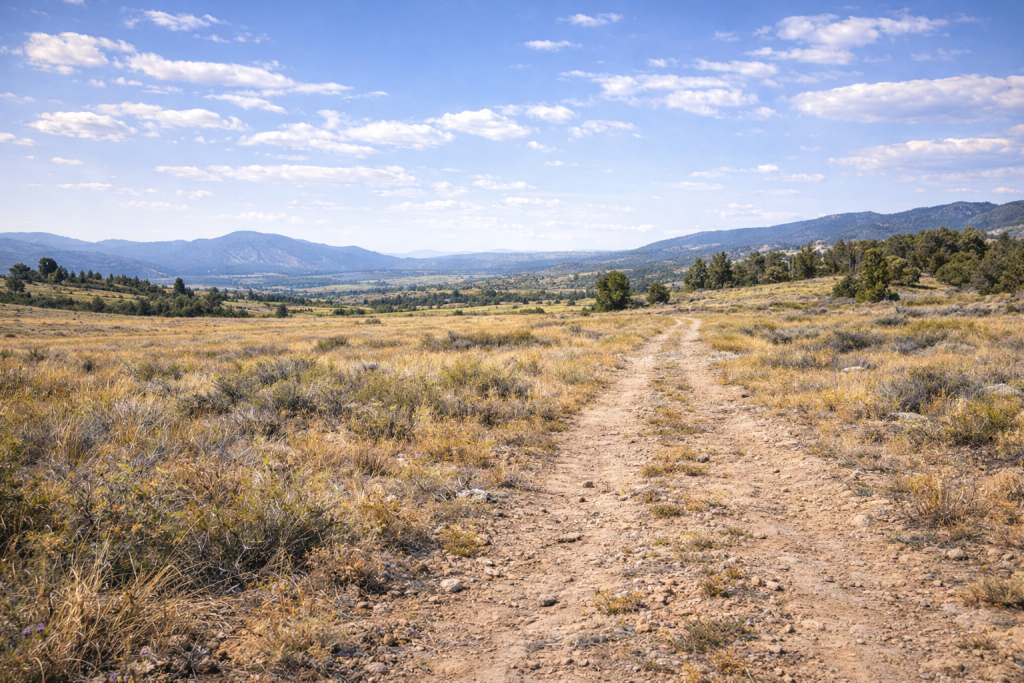
Cheap land for sale in the US can look like a perfect deal on paper, but the purchase price is only part of the true cost. Many first-time buyers make expensive mistakes because they focus only on how cheap the land is without understanding the hidden costs that may follow.
Knowing these costs upfront can save you thousands of dollars and years of frustration.
1. Zoning and Land-Use Restrictions
Not all land can be used the way you intend.
Some cheap parcels are zoned for:
-
Agricultural use only
-
Recreational use (no permanent buildings)
-
Seasonal or camping use
Before buying, always confirm zoning rules with the county planning office.
2. Water Access and Drilling Costs
Many cheap land parcels do not have:
-
Public water lines
-
Wells
-
Legal water rights
Drilling a well can cost $5,000 to $20,000+, depending on location and depth.
3. Road Access and Easements
Some land looks cheap because it has no legal access.
Watch out for:
-
Landlocked parcels
-
Dirt roads that become impassable
-
No recorded easement
Without legal access, land can be impossible to build on or resell.
4. Utility Connection Expenses
Bringing utilities to rural land can be costly:
-
Electricity: thousands of dollars per pole
-
Septic systems: $3,000–$10,000
-
Internet access may be unavailable
Off-grid living may be cheaper long-term, but it requires planning.
5. Flood Zones and Environmental Restrictions
Cheap land is sometimes cheap for a reason:
-
Floodplains
-
Wetlands
-
Protected wildlife areas
Building in these areas can be restricted or prohibited.
6. Property Taxes and Back Fees
Even cheap land has annual costs:
-
Property taxes
-
HOA dues (if applicable)
-
Past-due taxes or liens
Always confirm that all taxes are current before buying.
7. Survey and Boundary Costs
Some parcels lack a recent survey.
You may need to pay for:
-
Boundary surveys
-
Lot line verification
-
Dispute resolution
This can cost several hundred to several thousand dollars.
8. Resale and Liquidity Challenges
Cheap land is not always easy to sell.
Challenges include:
-
Limited buyer pool
-
Remote locations
-
Zoning restrictions
Buy land you’re comfortable holding long-term.
Why Understanding Hidden Costs Matters
Cheap land can be a smart investment only when total costs are understood upfront. Buyers who do proper due diligence often turn cheap land into valuable assets while those who skip this step regret it.
Who Should Buy Cheap Land in the US?
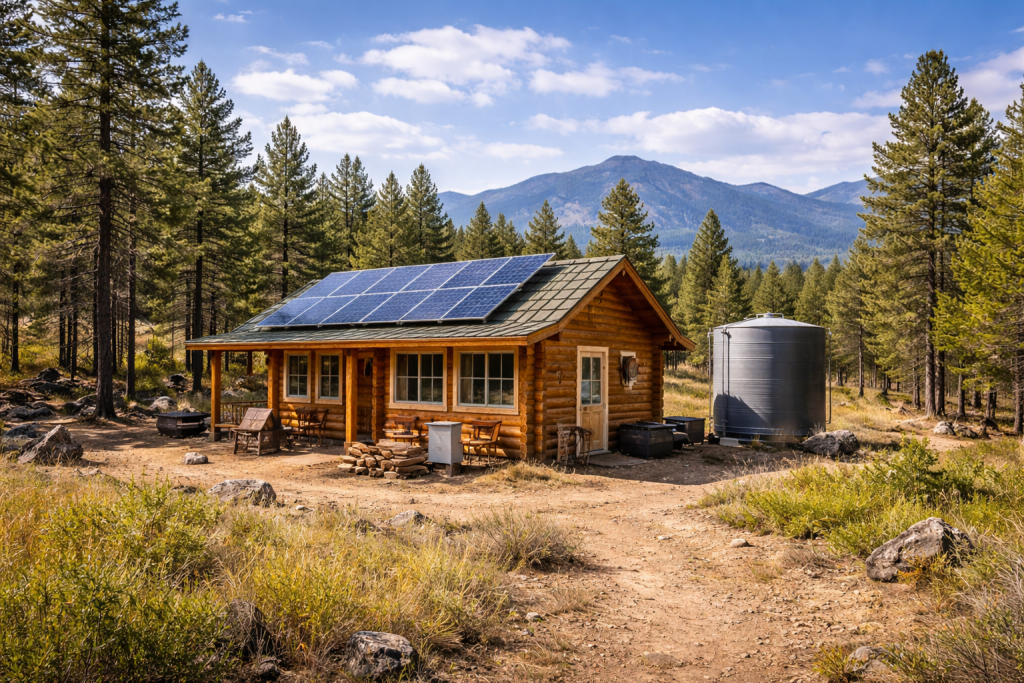
Cheap land for sale in the US isn’t for everyone but for the right buyer, it can be one of the smartest and most affordable ways to own property. Understanding who cheap land is best for helps buyers make confident, realistic decisions instead of emotional ones.
Below are the types of buyers who benefit the most from cheap land.
1. First-Time Land Buyers
Cheap land is an excellent entry point into real estate for beginners.
Why it works:
-
Low upfront cost
-
No mortgage required
-
Lower financial risk
First-time buyers can learn the basics of land ownership without taking on heavy debt.
2. Off-Grid and Self-Sufficient Living Enthusiasts
Many people buy cheap land to escape high living costs and build a self-sufficient lifestyle.
Ideal for:
-
Solar-powered homes
-
Rainwater collection
-
Minimalist living
Remote land is often perfect for buyers who don’t rely on city utilities.
3. Homesteaders and Small-Scale Farmers
Cheap land in rural states can support:
-
Gardening and food production
-
Livestock (where zoning allows)
-
Long-term family use
This is especially attractive for people seeking sustainability and independence.
4. RV Owners and Van Lifers
Some counties allow RVs or temporary structures on private land.
Why cheap land works well:
-
No campground fees
-
Long-term parking options
-
Privacy and flexibility
Always check local ordinances before buying.
5. Mobile Home and Tiny Home Owners
In many rural areas, cheap land can legally support:
-
Manufactured homes
-
Tiny homes
-
Modular homes
This option offers affordable housing without high rent.
6. Long-Term Investors
Land investors often buy cheap land to:
-
Hold for appreciation
-
Resell later at a higher value
-
Use for future development
Because land has low maintenance costs, it’s attractive for patient investors.
7. Recreational and Weekend Land Buyers
Some buyers want land for:
-
Camping
-
Hunting
-
Fishing
-
Family retreats
Cheap land makes recreational ownership possible without ongoing expenses.
Who Should Be Careful With Cheap Land?
Chep land may not be ideal for:
-
Buyers who need immediate construction
-
People dependent on city utilities
-
Those unwilling to research zoning and access
Knowing your goal before buying is essential.
Frequently Asked Questions About Cheap Land for Sale in the US
What is the Cheapest State to Buy Land in the US?
States like Arizona, New Mexico, Nevada, Arkansas, and West Virginia consistently rank among the cheapest states to buy land in the US. Prices are lowest in rural counties where demand is limited and land supply is high.
Is Cheap Land For Sale In The US Legit or a Scam?
Yes, cheap land for sale in the US is legitimate, but scams do exist. Legit deals usually come from counties, government auctions, or verified private sellers. Always verify the parcel number, zoning, access rights, and ownership before sending money.
Can I Really Buy Land in the US For Under $1,000?
Yes, but land under $1,000 is usually:
-
Very remote
-
Lacking utilities
-
Sold through tax sales or bulk land sellers
It’s best suited for long-term investment or recreational use rather than immediate building.
Can I Build a House On Cheap Land?
Sometimes. It depends on:
-
Zoning laws
-
County building codes
-
Access to water and utilities
Some cheap land is zoned for residential use, while others allow only agricultural or recreational use. Always confirm before buying.
Can I Buy Cheap Land With No Credit Check?
Yes. Many sellers offer owner financing, which allows buyers to purchase land with:
-
No credit check
-
Low down payment
-
Monthly installments
This is one of the most common ways people buy cheap land in the US.
Are Property Taxes High On Cheap Land?
No. Property taxes on cheap land are usually very low, especially in rural counties. In many cases, annual taxes range from $10 to $200, depending on location and parcel size.
Can Foreigners Buy Cheap Land in the US?
Yes. Foreigners can legally buy land in most US states. However, some states may have restrictions on agricultural land, and buyers should consult a real estate attorney for clarity.
Is Cheap Land a Good Investment?
Cheap land can be a good investment if:
-
You buy in the right county
-
You understand zoning and access
-
You’re willing to hold long-term
Land does not depreciate like buildings, but it may take time to resell.
Why is Some Land So Cheap?
Land is often cheap because it:
-
Is far from cities
-
Has no utilities
-
Has limited demand
-
Has zoning restrictions
Cheap doesn’t mean useless—it simply means it serves a different purpose.
How Do I Avoid Mistakes When Buying Cheap Land?
To avoid costly mistakes:
-
Verify zoning and access
-
Check flood zones
-
Confirm taxes are paid
-
Avoid rushed deals
-
Use escrow when possible
Doing proper due diligence is key.
Final Thoughts: Is Buying Cheap Land in the US Worth It?
Buying cheap land for sale in the US can be one of the most affordable ways to enter real estate, if you do it the right way. While cheap land isn’t ideal for every buyer, it offers real opportunities for people who are flexible, patient, and willing to do basic research.
For first-time buyers, cheap land provides a low-risk way to own property without mortgages or heavy debt. For off-grid enthusiasts, homesteaders, and RV owners, it opens the door to independence and lower living costs. And for long-term investors, cheap land can be a smart asset to hold while markets grow and development expands.
However, price alone should never be the deciding factor. Zoning laws, access rights, utilities, water availability, and future usability matter just as much as the purchase cost. The buyers who succeed with cheap land are those who buy with clarity, not urgency.
If you take the time to understand where to buy, what questions to ask, and what hidden costs to expect, cheap land can become more than just a bargain—it can be a foundation for future opportunity.
