

You can spend eight hours in bed and still wake up exhausted. Not because you stayed up too late. Not because you scrolled your phone. But because the mattress under you is working against you.
Here is the uncomfortable truth most people do not want to admit. A bad mattress can quietly drain your energy, strain your back, and wreck your sleep quality for years. And the worst part is this: price does not always equal comfort. Some people spend $2,000 and regret it. Others spend $300 and sleep like royalty.
If you are searching for the best cheap mattress, you are probably walking a tightrope. You want something affordable. You do not want to overspend. But you also refuse to gamble your spine on a flimsy slab of foam that sags in six months. You want value. Real comfort. Real support. Real durability. And you want it without emptying your bank account.
The mattress industry in the United States is flooded with options. Memory foam. Hybrid. Innerspring. Cooling gel. Pressure relief layers. Zoned coils. Trial periods. Lifetime warranties. Marketing claims everywhere. It is overwhelming. And when every brand claims to be the “best,” how do you actually know which cheap mattress is worth your money?
That is exactly why this guide exists.
This is not a shallow list of random beds pulled from a marketplace search. This is a deep, practical, no-fluff breakdown of what makes a cheap mattress genuinely good, which affordable mattresses in 2026 deliver real comfort under $500, and how to avoid the common traps that leave buyers frustrated.
Inside this guide, you will discover:
• What separates a low-quality mattress from a high-value budget mattress
• The best cheap mattress options for side sleepers, back sleepers, stomach sleepers, and couples
• How long you can realistically expect a budget mattress to last
• Where to buy affordable mattresses in the US without getting burned
• Hidden red flags most shoppers overlook
• Smart upgrades that can make a cheap mattress feel significantly more expensive
Sleep is not a luxury. It is a foundation. Your focus, mood, productivity, and even physical recovery depend on it. And the good news is you do not need to spend thousands of dollars to get it right.
The best cheap mattress is not about cutting corners. It is about spending wisely. It is about understanding materials, construction, support, and value so you can stretch your dollars without sacrificing comfort.
If you are ready to stop guessing, stop overspending, and finally wake up without that dull back ache or restless tossing, keep reading.
What Actually Makes a Mattress “Cheap” But Still Good?
The phrase best cheap mattress can feel like a contradiction. For many shoppers, cheap automatically means low quality, short lifespan, or uncomfortable sleep. But in reality, price and performance are not always directly connected. Some mattresses are expensive because of branding, retail markups, or showroom commissions. Others are affordable because they skip unnecessary extras and focus on core comfort and support.
To understand how to find the best cheap mattress, you need to know what you are paying for and what you can safely live without.
The Real Price Ranges in the United States
In the US market, mattress pricing typically breaks down like this for a queen size:
Under $300
These are ultra-budget options. Most are basic memory foam or thin hybrid mattresses. Some can be surprisingly comfortable, but durability may be limited.
$300 to $500
This is the sweet spot for the best cheap mattress category. You can find well-built memory foam mattresses and entry-level hybrids with decent support and comfort layers.
$500 to $700
This is still considered budget-friendly in today’s mattress market. You may get thicker profiles, better cooling materials, and longer trial periods.
Once you move beyond $1,000, you are typically paying for premium materials, advanced cooling, stronger coils, or luxury branding.
For most shoppers looking for the best cheap mattress, the $300 to $500 range offers the strongest balance of value and performance.
Why Some Mattresses Cost Less
There are several reasons why a mattress can be affordable without being terrible.
Direct-to-consumer model
Many modern brands sell online and ship mattresses compressed in a box. This eliminates retail showroom overhead and sales commissions. The savings are passed to you.
Simpler construction
Budget mattresses often use fewer layers. Instead of multiple foam densities and specialty materials, they focus on a comfort layer and a support core.
Basic materials
Instead of natural latex or hand-tufted cotton, cheap mattresses often use polyurethane foam or basic steel coils.
Lower marketing costs
Some affordable brands rely on marketplace platforms instead of national advertising campaigns.
None of these automatically make a mattress bad. They simply reduce cost.
Materials That Matter Most
When evaluating the best cheap mattress, materials tell you more than the brand name.
Memory Foam
Common in budget mattresses. It contours to your body and relieves pressure. The key factor is foam density. Higher density foams generally last longer.
Polyfoam Core
Most budget mattresses use a polyurethane foam base layer. A thicker, firmer core improves durability.
Gel Infusion
Often added to memory foam to help with cooling. It is helpful but not a miracle solution.
Steel Coils
In hybrid mattresses, coils improve airflow and support. The coil count and gauge influence durability.
The goal is not luxury materials. The goal is balanced construction that supports your body weight and sleep position.
Red Flags to Avoid
If you want the best cheap mattress, you need to avoid the traps that make some low-cost beds disappointing.
Very thin mattresses under 8 inches
These may lack enough support for adults, especially over 180 pounds.
No trial period
A reputable brand should offer at least 90 nights. Sleep adjustment takes time.
No warranty
Even budget mattresses should include a minimum 5 to 10 year warranty.
Poor edge support
If the sides collapse easily, durability may be questionable.
Fiberglass fire barriers
Some ultra-cheap mattresses use fiberglass under the cover as a fire retardant. If the cover is removed and damaged, fibers can spread. Look for brands that clearly disclose materials.
A cheap mattress should save you money, not create new problems.
Certifications That Add Trust
Even in the budget category, there are important certifications that indicate safer materials.
CertiPUR-US
This certification means the foam is made without harmful chemicals like formaldehyde and certain heavy metals.
GREENGUARD Gold
Indicates low chemical emissions for indoor air quality.
If you are shopping online, check the product description carefully. Transparency is a strong sign of quality.
Comfort vs Durability: The Trade-Off
The biggest difference between a $400 mattress and a $2,000 mattress is not always immediate comfort. Many cheap mattresses feel great in the first year. The difference shows up over time.
Higher-end mattresses often use denser foams and reinforced coils that resist sagging longer. Budget mattresses may soften faster.
For many people, replacing a $400 mattress every five years is still more cost-effective than buying a $2,000 mattress once. It depends on your priorities.
The key is realistic expectations. The best cheap mattress should give you solid comfort and support for several years, not decades.
The Value Mindset
When searching for the best cheap mattress, think in terms of cost per year rather than sticker price.
If you spend $400 and it lasts five years, that is $80 per year for better sleep.
That is less than many people spend on streaming subscriptions annually.
Sleep is not something you should gamble on, but it also does not have to be a financial burden.
How to Choose the Best Cheap Mattress for Your Sleep Position
Before you pick the best cheap mattress, you need to understand one critical truth. A mattress that feels amazing to one person can feel terrible to another. Your sleep position, body weight, and pressure points determine what kind of support you actually need.
This is where most budget mattress guides fail. They list products without explaining who they are truly for.
Let’s fix that.
Best Cheap Mattress for Side Sleepers
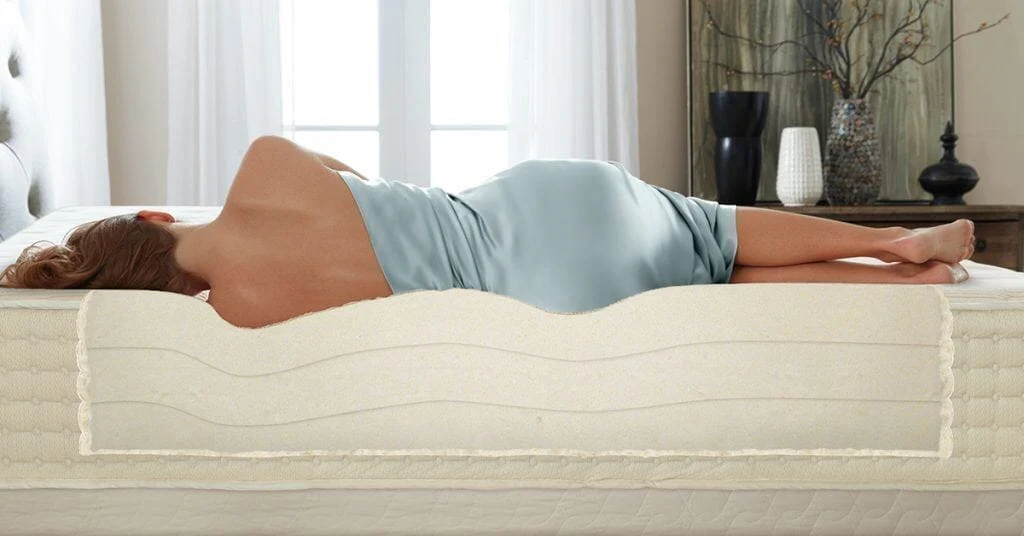
Side sleeping is the most common sleep position in the United States. It also puts the most pressure on your shoulders and hips.
Side sleepers need:
- Pressure relief
- Contouring foam
- Medium to medium-soft firmness
- Enough support to keep the spine aligned
If a mattress is too firm, you will feel numbness or shoulder pain. If it is too soft, your hips sink too deeply and strain your lower back.
A memory foam mattress between 10 and 12 inches thick usually works best in the affordable category.
Best Cheap Mattress for Back Sleepers
Back sleepers need balanced support. The mattress should support the natural curve of the spine without excessive sinking.
Look for:
- Medium firmness
- Strong support core
- Minimal sagging in the center
Too soft and your hips drop. Too firm and your lower back may feel strained.
Hybrid mattresses in the under $500 range often work very well for back sleepers because coils provide structured support.
Best Cheap Mattress for Stomach Sleepers
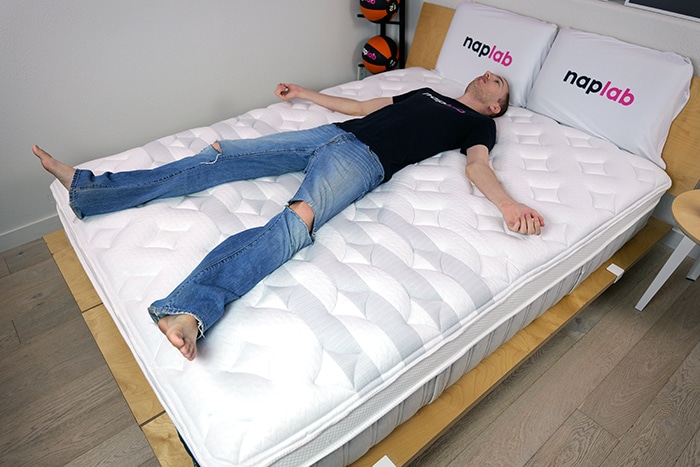
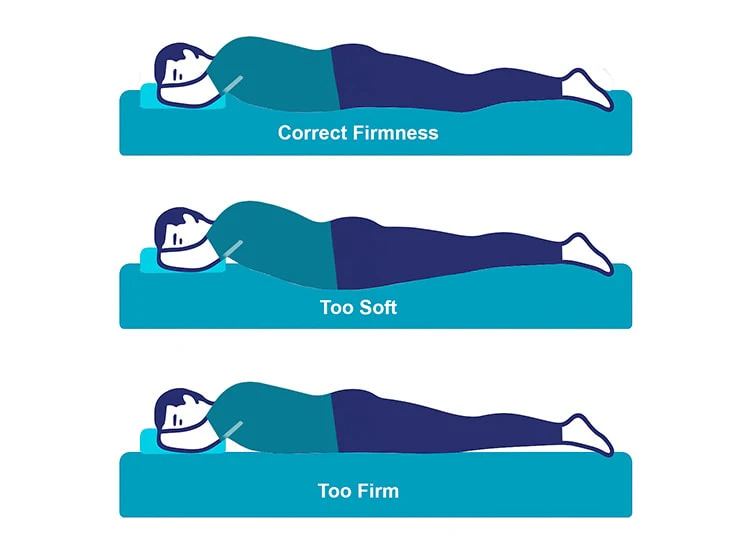
Stomach sleeping is the most demanding position for a mattress. It requires firmness.
If the mattress is too soft:
- Your hips sink
- Your lower back arches
- You wake up stiff and sore
Stomach sleepers should look for:
- Firm or medium-firm mattresses
- Thinner comfort layers
- Strong core support
Budget hybrids and firmer memory foam mattresses usually perform better than plush foam models.
Best Cheap Mattress for Couples
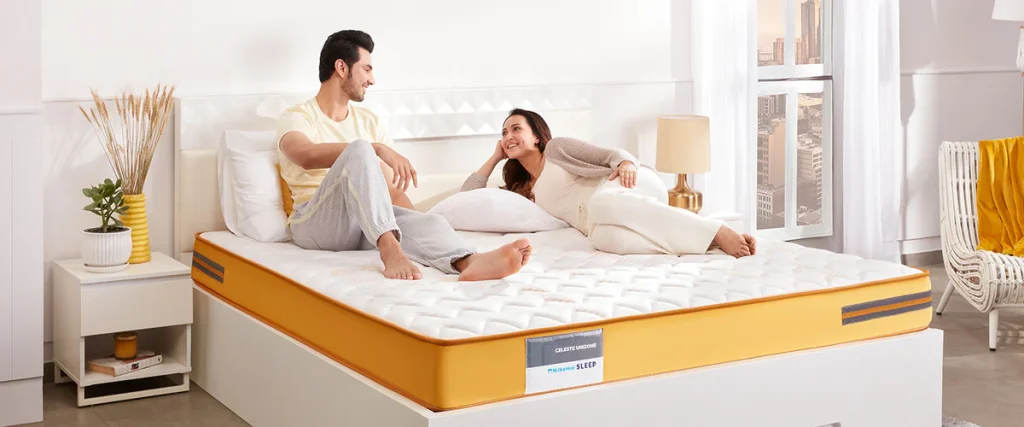
Couples face two main challenges:
- Motion transfer
- Edge support
If your partner moves and you wake up, the mattress lacks motion isolation. Memory foam absorbs movement better than traditional innerspring.
Edge support matters because couples use the entire surface. Weak edges make the bed feel smaller.
Hybrid mattresses often provide stronger edge support than all-foam budget models.
Best Cheap Mattress for Heavier Sleepers
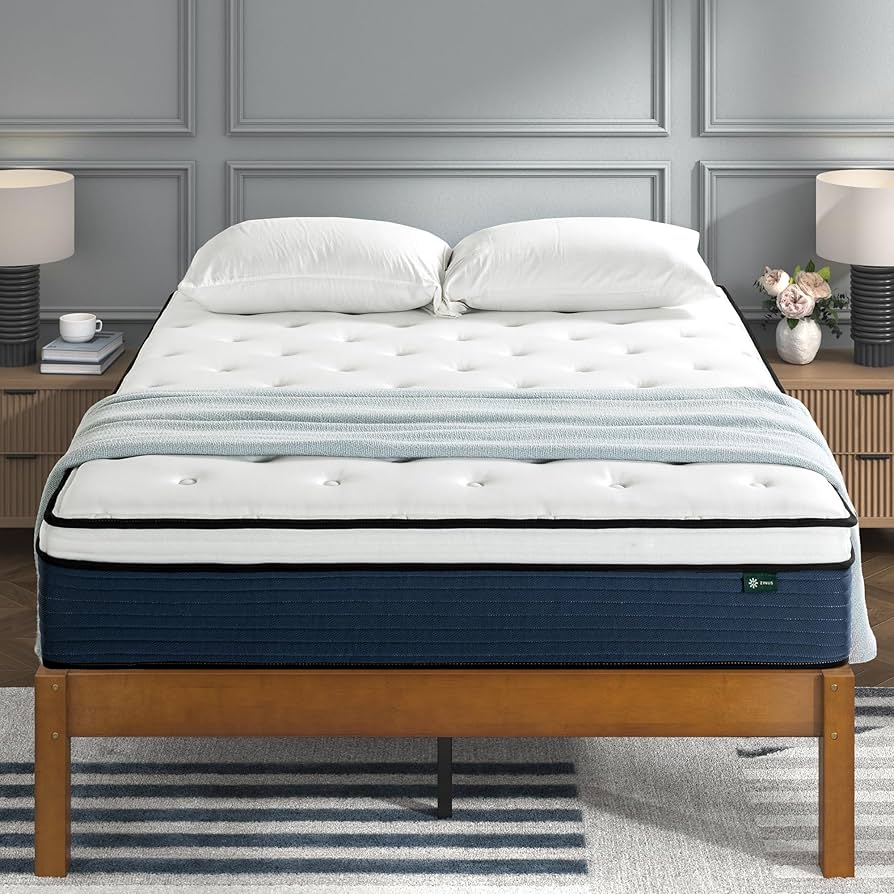
Heavier individuals need stronger support systems.
Key features:
- Thicker profile at least 10 inches
- Higher density foam
- Reinforced coil systems in hybrids
- Firm to medium-firm feel
Thin ultra-budget mattresses under 8 inches often wear out faster under higher body weight.
Best Cheap Mattress Picks in 2026
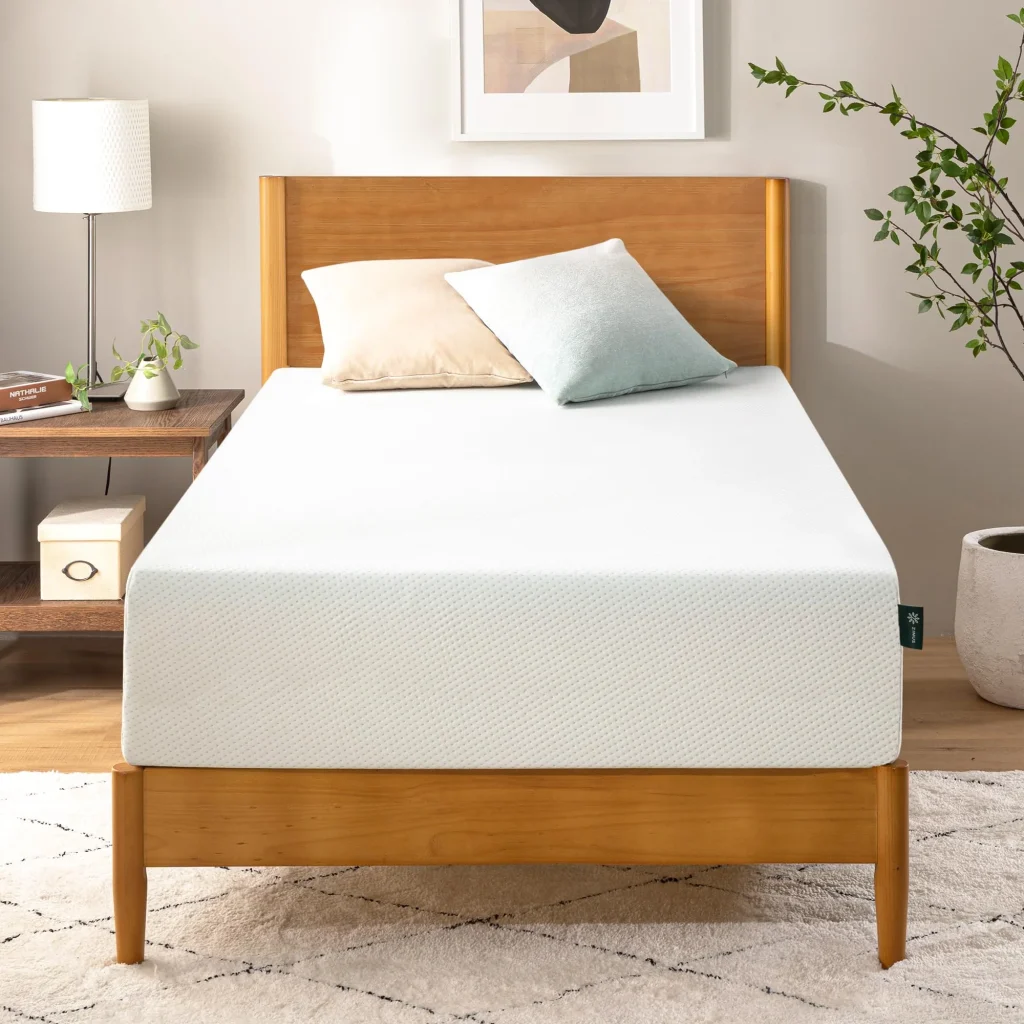
1. Zinus Green Tea Memory Foam Mattress
The Zinus Green Tea Memory Foam Mattress has become one of the most recognized budget mattresses in the United States. It is widely available, aggressively priced, and surprisingly comfortable for many sleepers.
Price Range for Queen
Typically between $250 and $400 depending on thickness.
Firmness
Medium to medium-firm depending on model.
Best For
Side sleepers
Back sleepers under 230 pounds
Budget-focused buyers
Materials
Comfort layer infused with green tea extract
Transition foam layer
High-density support foam base
Performance Overview
Pressure Relief
Very good for the price. The memory foam contours well around shoulders and hips.
Motion Isolation
Strong. Movement is absorbed well, making it suitable for couples.
Edge Support
Average. As with most all-foam mattresses in this price range, edges compress more than hybrids.
Cooling
Moderate. It sleeps slightly warm but manageable for most people unless you are a very hot sleeper.
Durability Expectation
Three to five years for average-weight sleepers.
Who Should Avoid It
Heavier stomach sleepers
Those who need strong edge support
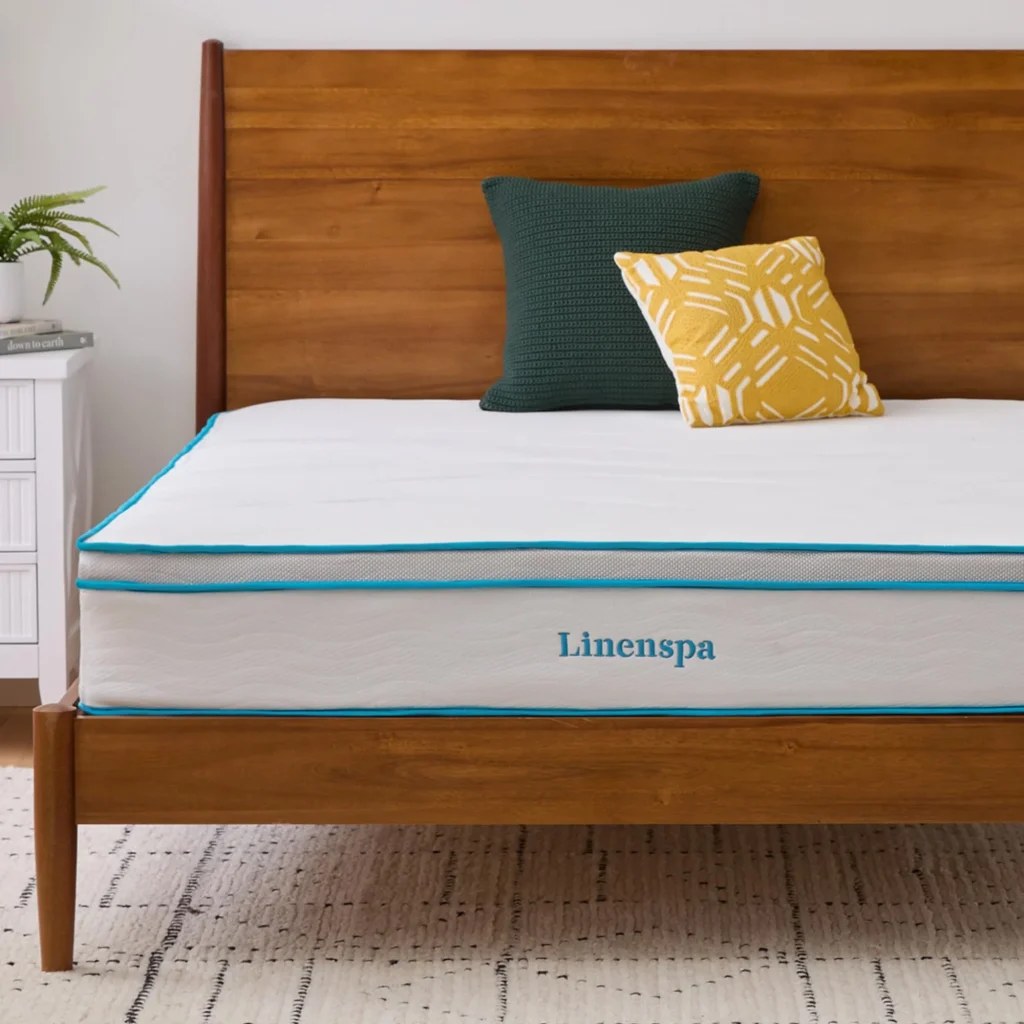
2. Linenspa 10 Inch Hybrid Mattress
If you want coils without paying premium prices, the Linenspa Hybrid is one of the most accessible entry points into hybrid mattresses.
Price Range for Queen
Usually between $250 and $450.
Firmness
Medium.
Best For
Back sleepers
Combination sleepers
People who want better airflow
Materials
Quilted foam top layer
Comfort foam
Steel coil support core
Performance Overview
Support
Better structured support compared to all-foam beds at this price.
Cooling
Improved airflow due to coil system.
Motion Isolation
Good, but not as strong as thick memory foam.
Edge Support
Stronger than most budget all-foam mattresses.
Durability Expectation
Four to six years depending on body weight.
Who Should Avoid It
Lightweight side sleepers who prefer deep contouring.
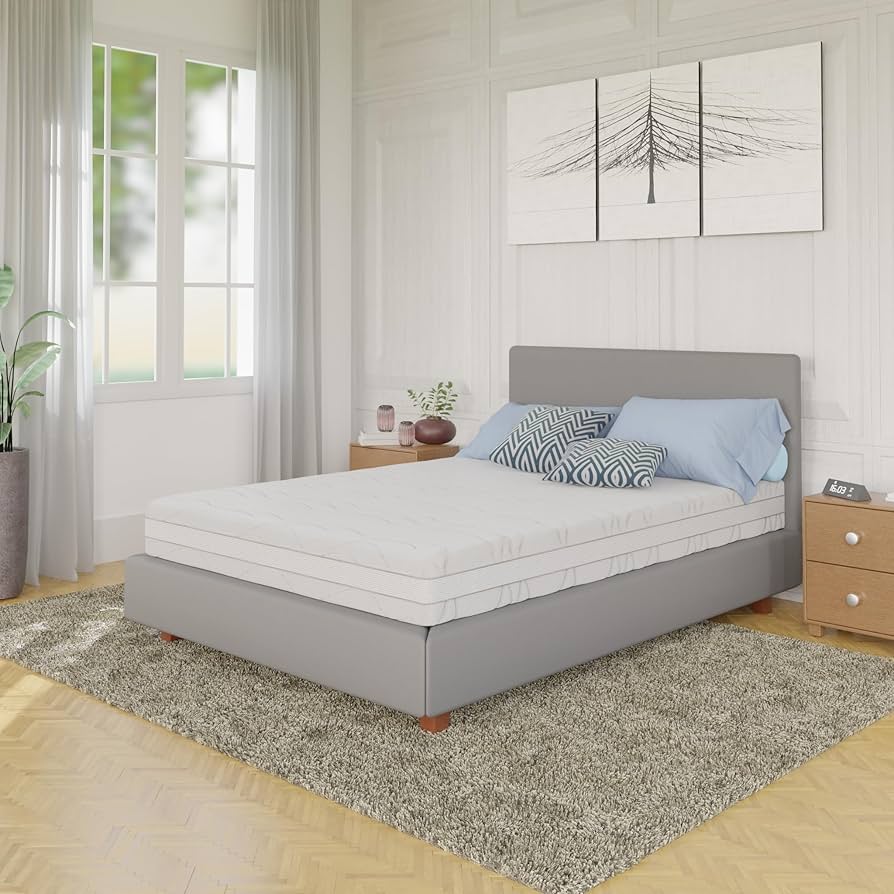
3. Amazon Basics Memory Foam Mattress
This mattress appeals to buyers who want simplicity, fast shipping, and competitive pricing.
Price Range for Queen
Generally between $250 and $350.
Firmness
Medium-firm.
Best For
Guest rooms
Short-term use
Budget shoppers who prioritize convenience
Materials
Memory foam comfort layer
Support foam core
Performance Overview
Pressure Relief
Good for lighter sleepers.
Motion Isolation
Very good due to foam construction.
Edge Support
Average to below average.
Cooling
Basic. Not designed for extreme heat regulation.
Durability Expectation
Three to four years.
Who Should Avoid It
Heavier individuals
People seeking long-term durability beyond five years
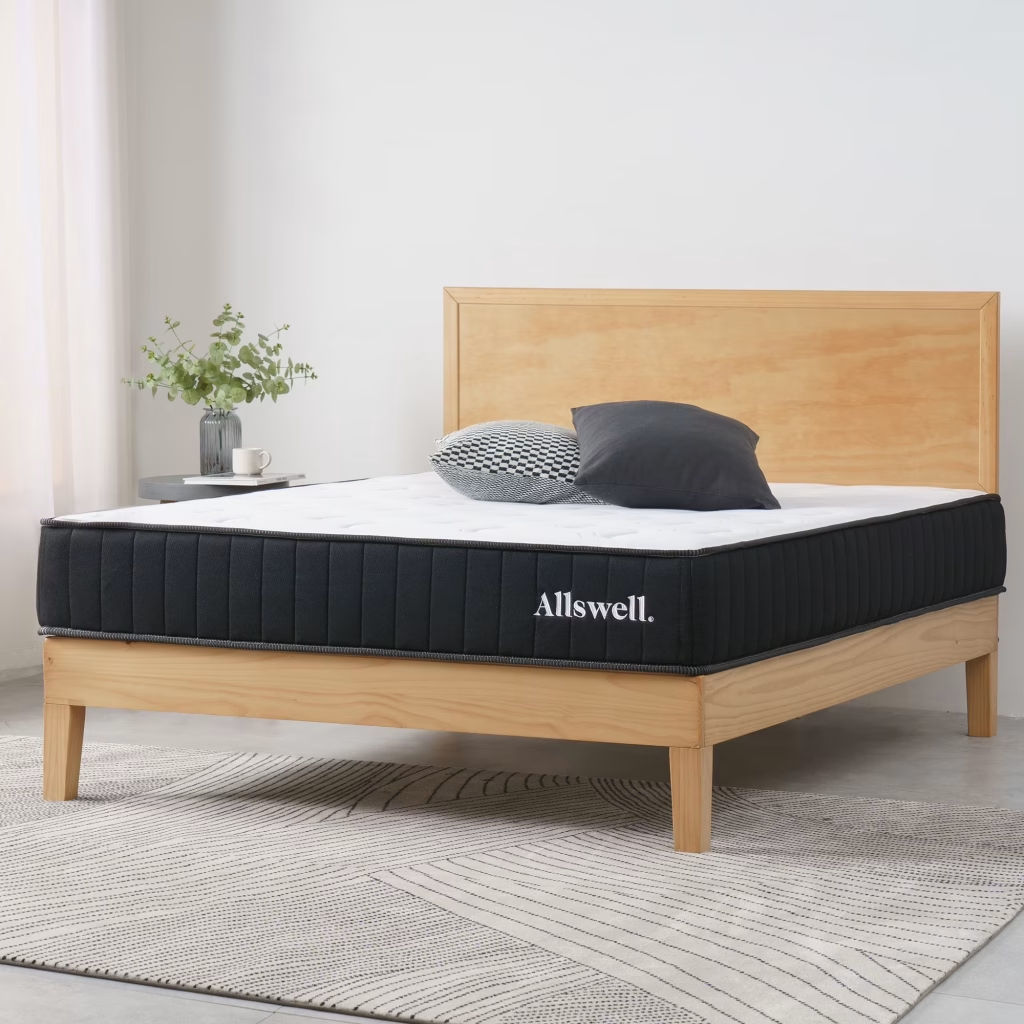
4. Allswell Hybrid Mattress
Allswell has positioned itself as a budget-friendly brand offering more premium touches than typical entry-level beds.
Price Range for Queen
Often between $350 and $500.
Firmness
Medium-firm.
Best For
Back sleepers
Couples
Value-focused hybrid shoppers
Materials
Quilted top layer
High-density foam
Individually wrapped coils
Performance Overview
Support
Strong spinal alignment for back sleepers.
Motion Isolation
Better than traditional innerspring due to wrapped coils.
Edge Support
Above average for its price category.
Cooling
Improved airflow compared to all-foam models.
Durability Expectation
Five to seven years.
Who Should Avoid It
Sleepers who prefer plush, deep sink.
Quick Comparison Table
Mattress | Price Range | Type | Best For | Durability | Edge Support
Zinus Green Tea | $250 to $400 | Memory Foam | Side sleepers | Moderate | Average
Linenspa Hybrid | $250 to $450 | Hybrid | Back sleepers | Moderate to Good | Good
Amazon Basics | $250 to $350 | Memory Foam | Guest rooms | Moderate | Average
Allswell Hybrid | $350 to $500 | Hybrid | Couples | Good | Good
Cheap Mattress vs Expensive Mattress: Is Paying More Actually Worth It?
One of the biggest questions buyers ask when searching for the best cheap mattress is simple: if I spend more, will I actually sleep better?
The answer is not as straightforward as mattress showrooms would like you to believe.
In many cases, a well-made budget mattress can feel just as comfortable as a $1,500 bed during the first year. The real difference often shows up in durability, materials, advanced cooling, and structural reinforcement.
Let’s break it down clearly.
Material Differences
Expensive mattresses often include:
- Higher density memory foam
- Natural latex layers
- Zoned support systems
- Reinforced edge coils
- Advanced cooling fabrics
Budget mattresses typically include:
- Standard density polyurethane foam
- Basic steel coils
- Fewer comfort layers
- Simpler quilted covers
This does not mean cheap equals bad. It means premium mattresses are engineered to maintain performance longer.
Lifespan Comparison
A realistic expectation for the best cheap mattress is three to seven years depending on materials and body weight.
Premium mattresses often last seven to twelve years.
But here is where math matters.
If you spend $400 and replace it in five years, that equals $80 per year.
If you spend $2,000 and it lasts ten years, that equals $200 per year.
The cheaper option may still offer better value for many households.
Performance Differences Over Time
The biggest difference appears in:
Foam breakdown
Budget foam may soften faster.
Edge durability
Premium beds often use reinforced edges that hold shape longer.
Motion isolation refinement
High-end mattresses reduce movement more precisely.
Cooling technology
Premium brands invest heavily in airflow and heat dispersion.
However, many sleepers do not need elite-level cooling or ultra-dense latex. They simply need proper spinal support and basic pressure relief.
That is why the best cheap mattress category continues to grow in popularity across the United States.
Where to Buy the Best Cheap Mattress in the United States
Choosing where to buy is almost as important as choosing the mattress itself. Price fluctuations, return policies, and delivery options vary significantly.
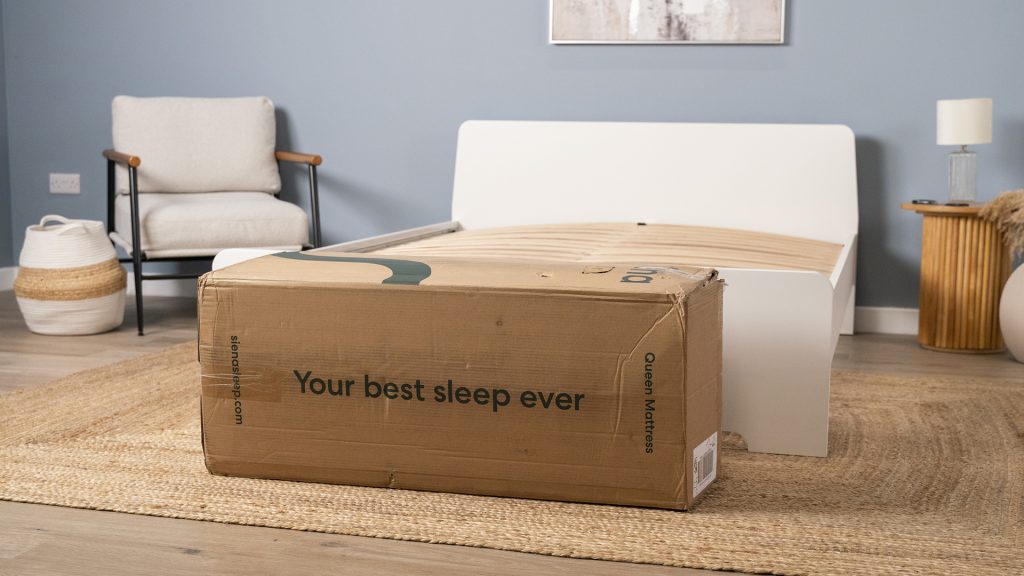
Amazon
Amazon remains one of the largest online mattress retailers in the country. It offers:
- Competitive pricing
- Fast shipping
- Wide selection
- Frequent discounts
Ideal for shoppers who want convenience and quick comparison.
Walmart
Walmart offers both online and in-store options, often at aggressive prices.
Advantages include:
- Easy returns in many locations
- Frequent rollback pricing
- Budget-friendly exclusive models
Target
Target carries curated mattress options with stylish bedroom displays.
It may not have the largest selection, but it often features:
- Competitive mid-range pricing
- Simple return policies
- Seasonal promotions
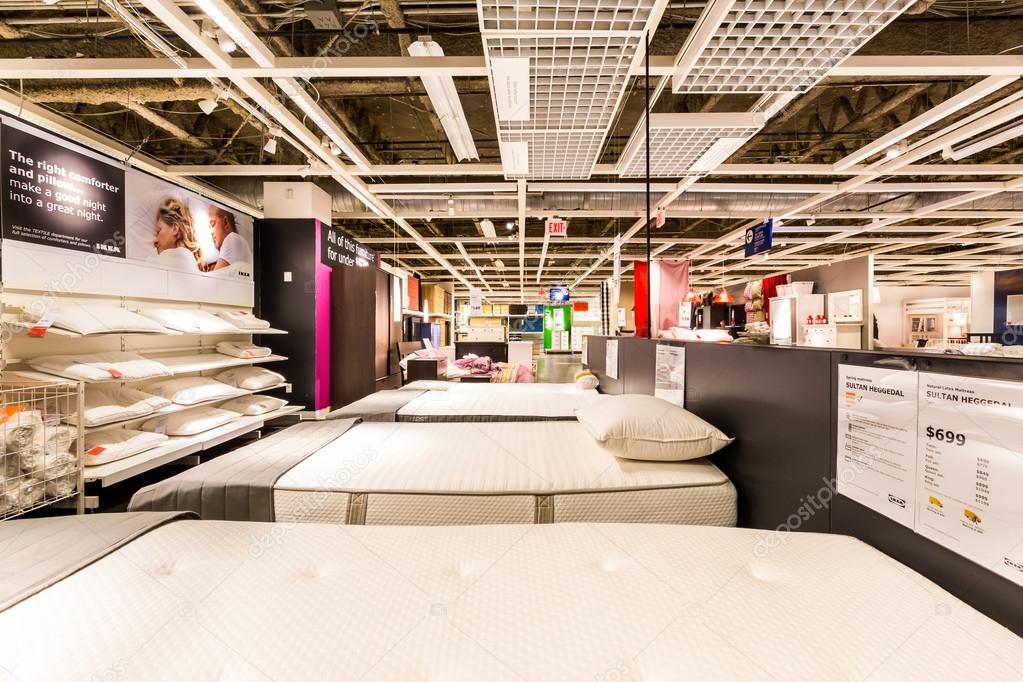
IKEA
IKEA focuses on affordability and practical design.
IKEA mattresses are often priced competitively and designed for straightforward comfort.
Direct-to-Consumer Brands
Many affordable mattress brands sell directly through their own websites.
Benefits:
- Longer sleep trials
- Better warranty terms
- Exclusive online discounts
This is where you often find some of the strongest contenders for the best cheap mattress because there is no retail markup.
Best Time of Year to Buy a Cheap Mattress
If you want to maximize savings, timing matters.
Major sale periods in the US include:
Memorial Day
Labor Day
Black Friday
Presidents’ Day
These holidays often bring the largest mattress discounts of the year. Many brands reduce prices significantly, even in the budget category.
How Long Will a Cheap Mattress Last?
The lifespan depends on materials and usage.
All-foam mattresses
Typically three to five years.
Hybrid mattresses
Often four to seven years due to coil support.
Factors that shorten lifespan:
- Higher body weight
- Lack of rotation
- Weak foundation support
- Excess moisture exposure
Signs your mattress needs replacement:
Visible sagging
Waking with new back pain
Deep body impressions
Noticeable loss of support
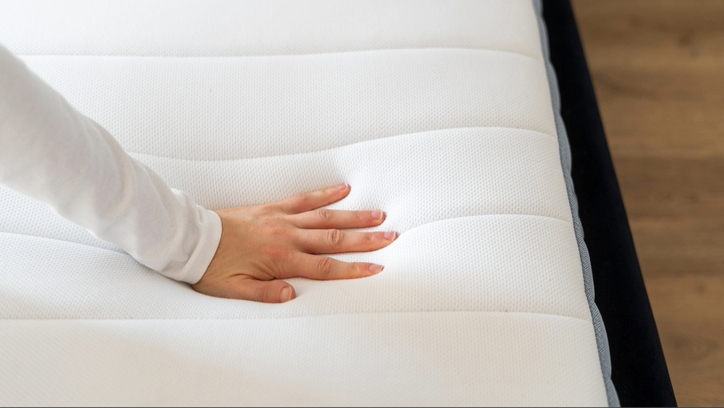
Rotating your mattress every three to six months can extend its usable life.
How to Make a Cheap Mattress Feel More Expensive
Even the best cheap mattress can be upgraded with small changes.
Add a high-quality mattress topper
A two-inch memory foam or latex topper can dramatically improve pressure relief.
Invest in supportive foundation
A sturdy bed frame prevents premature sagging.
Use breathable sheets
Cotton or bamboo sheets improve airflow.
Add a mattress protector
Prevents moisture damage and extends longevity.
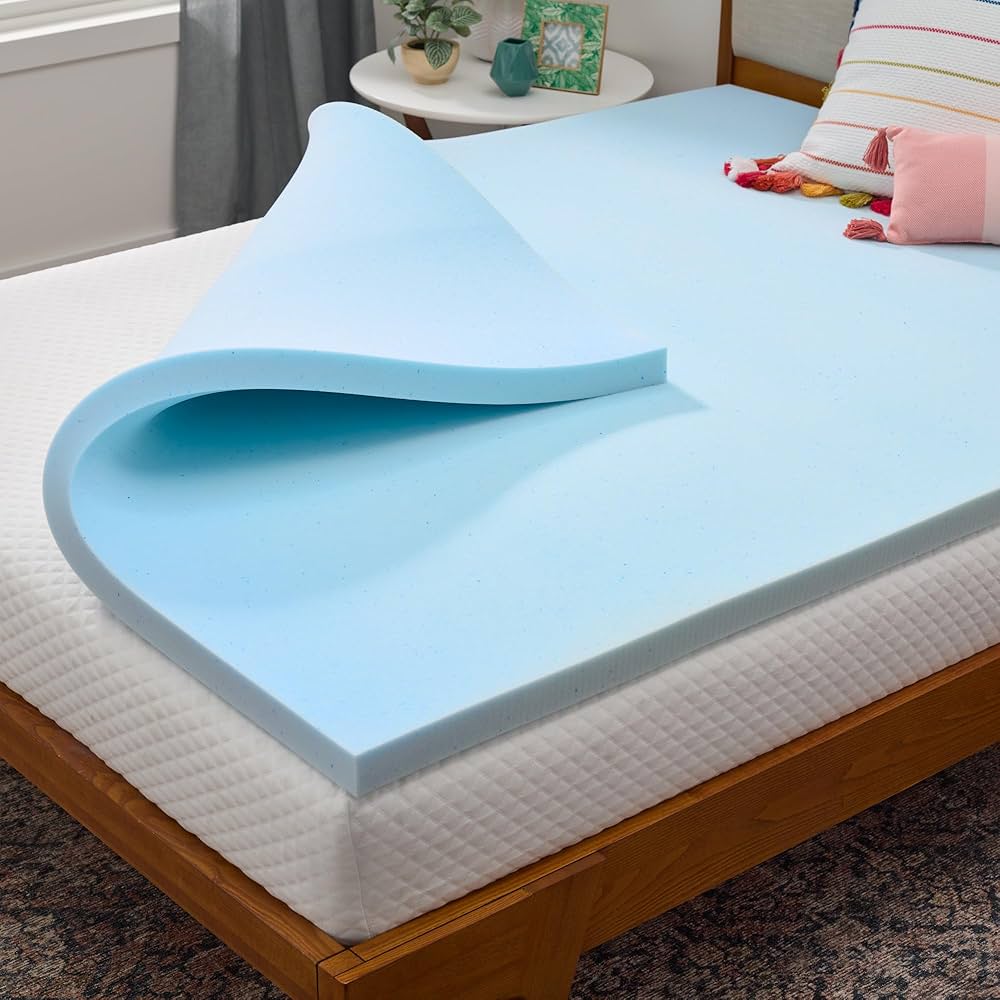
These small investments can significantly improve comfort without replacing the mattress.
Common Problems With Cheap Mattresses and How to Fix Them
Even the best cheap mattress is still a budget product. That does not mean it is a bad purchase. It simply means you should understand the most common issues and how to manage them.
When buyers feel disappointed, it is often because expectations were unrealistic or small problems were left unaddressed.
Let’s go through the most common concerns.
Off-Gassing Smell
Many memory foam mattresses release a temporary odor when first unboxed. This happens because the mattress was compressed and sealed in plastic for shipping.
What it smells like
A mild chemical or “new foam” scent.
How long it lasts
Usually 24 to 72 hours.
How to fix it
Place the mattress in a well-ventilated room. Open windows. Allow it to fully expand before sleeping on it.
This is common in both cheap and mid-range foam mattresses and is not usually harmful if the mattress uses certified foams.
Mattress Feels Too Firm at First
New foam often feels firmer during the first few weeks.
Why this happens
Foam needs time to break in and adjust to body heat and pressure.
How to fix it
Sleep on it consistently for at least 30 nights. If still too firm, add a two-inch mattress topper.
Sagging or Body Impressions
Budget mattresses may soften faster over time.
Signs to watch
Visible dips
Loss of spinal alignment
Waking with new discomfort
Prevention tips
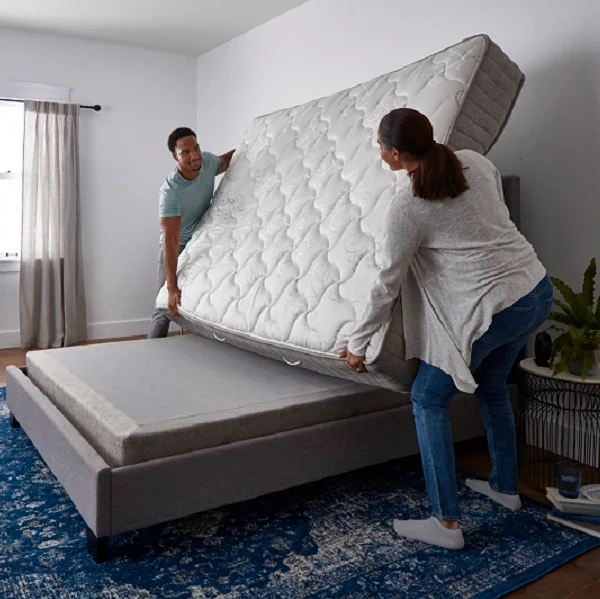
Rotate every three to six months
Use a proper foundation
Avoid sitting on the same edge daily
If sagging exceeds warranty limits, contact the manufacturer.
Overheating During Sleep
Some cheap memory foam mattresses retain heat.
Why
Dense foam traps body heat.
Solutions
Use breathable sheets
Lower room temperature
Choose hybrid mattress with airflow
Add cooling mattress topper
Weak Edge Support
All-foam mattresses under $400 often compress at the edges.
Why it matters
Makes the bed feel smaller
Harder to sit comfortably
Solutions
Choose hybrid models
Use center area for sleeping
Avoid prolonged edge sitting
Understanding these trade-offs helps you buy smarter rather than expecting perfection at a low price.
Frequently Asked Questions About the Best Cheap Mattress
Does a cheap mattress cause back pain?
Not automatically. Back pain usually comes from improper support or mismatched firmness. A well-chosen budget mattress that aligns your spine properly can reduce pain rather than cause it.
What is the best cheap mattress under $300?
For many shoppers, basic memory foam mattresses like Zinus or Amazon Basics offer strong value in this range. However, durability expectations should be realistic.
Is fiberglass in cheap mattresses dangerous?
Some ultra-budget mattresses use fiberglass as a fire barrier. It is generally safe if the outer cover is not removed or damaged. Always read product descriptions carefully.
How thick should a budget mattress be?
For adults, at least 8 to 10 inches is recommended. Heavier individuals should consider 10 to 12 inches for better support.
Can a cheap mattress last 10 years?
Most budget mattresses last between three and seven years. Ten years is uncommon unless the sleeper is lightweight and rotates the mattress consistently.
Is memory foam or hybrid better for a cheap mattress?
Memory foam often offers better motion isolation and pressure relief. Hybrid mattresses provide stronger support and airflow. The better choice depends on your sleep position and body weight.
Final Buying Checklist
Before purchasing the best cheap mattress, confirm the following:
Your budget range
Your sleep position
Your body weight
Minimum 90-night trial period
Warranty coverage of at least 5 years
Foam certifications
Proper bed frame support
This checklist protects you from impulse decisions.
Conclusion: Finding the Best Cheap Mattress Without Regret
Buying a mattress should not feel like gambling. The best cheap mattress is not about chasing the lowest price. It is about finding the right balance between cost, comfort, and durability.
In the United States today, it is entirely possible to spend under $500 and still get a mattress that supports your spine, relieves pressure points, reduces motion transfer, and lasts several years.
You do not need luxury branding. You need proper support. You need realistic expectations. You need materials that match your sleep style.
If you focus on firmness alignment, mattress thickness, trial period, and construction quality, you can confidently choose a budget mattress that feels far more expensive than its price tag.
Sleep impacts everything. Energy. Mood. Productivity. Physical health.
Spending wisely on the best cheap mattress is not cutting corners. It is making a smart, informed investment in your daily life.
